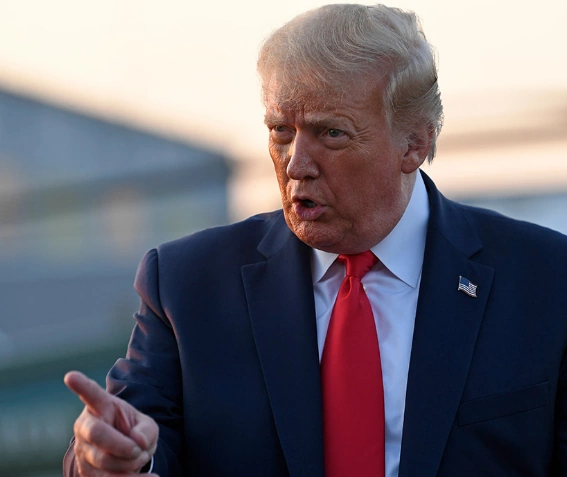
Trump has no concept of service or honour.
1. On Captured Soldiers: “I Like People Who Weren’t Captured”
The most prominent example of this mindset occurred in 2015 regarding Senator John McCain, who spent five and a half years as a POW in Vietnam.
The Quote: “He’s a war hero because he was captured. I like people who weren’t captured.”
The Context: Trump dismissed McCain’s status as a hero, arguing that “losing” or being caught disqualified someone from being a “winner.” This fits the autocratic pattern of redefining “honor” based on personal success rather than sacrifice.
2. On the Fallen: “Losers” and “Suckers”
In 2020, The Atlantic and later the Associated Press reported on Trump’s comments regarding American war dead buried at the Aisne-Marne American Cemetery in France.2
The Labels: He reportedly referred to the 1,800 Marines who died at Belleau Wood as “suckers” for getting killed and called the cemetery itself a place filled with “losers.”
The Underlying Logic: According to reports, Trump expressed confusion to his then-Chief of Staff, Gen. John Kelly (whose own son died in Afghanistan), asking, “I don’t get it. What was in it for them?” This suggests an inability to comprehend the concept of self-sacrifice for a community—the very opposite of the “self-determination” we discussed earlier.
3. On Physical and “Invisible” Injuries
Trump has frequently downplayed the severity of military injuries, particularly those that aren’t visible.
Brain Injuries as “Headaches”: After an Iranian missile attack on U.S. troops in Iraq in 2020, over 100 soldiers were diagnosed with Traumatic Brain Injuries (TBI). Trump dismissed these as “headaches” and “not very serious,” a stance he reiterated as recently as late 2024.
Wounded Veterans as a “Bad Look”: According to reports from former staff, Trump requested that wounded veterans (including amputees) be excluded from military parades, stating that “nobody wants to see that” and it was “not a good look” for him.
4. Disrespect for Allies in Afghanistan (Recent 2026 Remarks)
Most recently, in January 2026, Trump sparked a diplomatic crisis with his comments at the World Economic Forum and on Fox News regarding the 20-year war in Afghanistan.
The Claim: He stated that the U.S. “never needed” its NATO allies and claimed that allied troops “stayed a little back, a little off the front lines” while Americans did the work.
The Reaction: These comments caused “disgust and outrage” from leaders in the UK, Canada, and Australia.
The UK: Prime Minister Keir Starmer called the remarks “insulting and appalling,” pointing to the 457 British personnel who died.
Canada: Veterans pointed out that they took over the frontline in Kandahar specifically to allow U.S. forces to move to Iraq.
The Reality: For every two Americans who died in Afghanistan, one allied soldier died. Critics argue this rhetoric is a classic autocratic move: erasing the contributions of the “community” (allies) to centralize all credit—and power—within himself.
The Pattern: Re-Writing the Rules of Honor
This behavior illustrates the danger of a leader who changes the rules of respect for their own benefit. By labeling those who are captured or killed as “losers,” he effectively removes the community’s obligation to honor them, replacing a shared moral code with a single, autocratic rule: The only value is in winning (and appearing strong).
Leave a Reply
You must be logged in to post a comment.