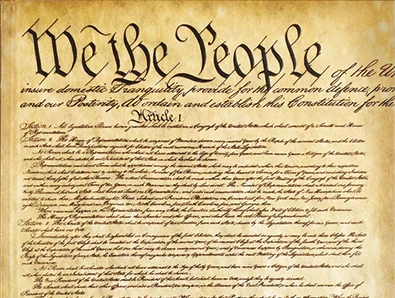
The phrase “We the People” carries a lot of weight in the USA.
It asserts the fact that the Constitution derives its power from the citizens rather than from the states or the federal government. The constitution provides the foundation of the nation on which the people seek to form a more perfect union, establish justice, ensure domestic tranquility, provide for common defence, promote general welfare, and secure liberty.
UK’s Unwritten Constitution and an MP’s 5 “masters”
The UK does not have a written constitution. We have a fundamentally different “operating system” – a constitutional monarchy operating as a parliamentary democracy.
We elect MPs to use their independent judgment. Once elected, an MP is a “Member of Parliament,” not a “Member for [Your Town].” They owe you their “mature judgment,” they are not delegates acting as the electorate’s messenger.
In practice an MP has five “masters”
- The Party: The platform they were elected on (the “Whip”).
- The Constituency: What the people back home want.
- The National Interest: What is best for the country as a whole.
- The Monarch and their heirs and successors
- Conscience: Their own moral or intellectual “mature judgment.”
How does an MP prioritise the demands of these “masters”? Does an MP represent the party’s interests first, the constituency’s interests or the national interest?
It’s arguable that we, not just MPs, should all listen to our conscience first. Our conscience is our inner voice that tells us the difference between right and wrong. Without a well functioning “inner compass” an MP can’t claim to be the best person to serve the electorate first above personal or party interests.
National and Constituency Interests Above Party
In the UK, it is a core parliamentary convention that once an MP is elected, they represent every single person in their constituency, regardless of how those people voted (or if they voted at all).
This is a fundamental shift that happens the moment the election result is declared. The candidate stops being just a “party campaigner” and becomes a “public servant.”
Make Whipping Illegal
It is for the above reason that whipping should be illegal. Party whips should not be allowed to bribe, bully or blackmail an MP to vote against their conscience or their commitment to national or constituency interests. Party interests should come second.
Of course the party leader wants to appear to be authoritative, to be in control. The party wants to be seen to implement their manifesto, to live up to promises. But these concerns are driven by the ego. The appearance of power should not trump the duty to serve and to listen to objections. If the party cannot win a majority by the persuasion of the better case, then the proposed measure should fail, not be forced through by the enforcers from the whip’s office.
We would not have gone to war in Iraq if it wasn’t for the corrupt whipping system. The government suffered the largest backbench rebellion in modern political history. They “won” the vote through use of a “3 line whip”.
Constitutional Monarchy
For those who believe in the power of the people there are many issues with any power residing with a monarchy. However, given that our head of state occupies a primarily ceremonial role, the pledge of allegiance that an MP is required to swear is largely symbolic.
After the general election in 2024, Norwich South MP Clive Lewis had to swear in a second time after failing to declare and affirm to bear true allegiance to King Charles’ heirs and successors. On the second swearing-in, he said “I was elected to Parliament to represent my constituents and our country to the best of my ability, to defend democracy and uphold human rights and one day I hope all Members of Parliament will be entitled to swear an oath of allegiance based on those values.”
The monarchy will be untroubled! – MP makes oath to King’s heirs at second attempt.
We The People (UK)
We The People of Britain have a right to expect more from our democracy. Our interests are not served best by the party political system which has become ever more polarised and tribal.
The concern over party politics is not new. The framers of the American Constitution did not want or expect political parties to emerge because they considered them divisive Wikipedia
Radical Reform is necessary through a major consultation and citizens’ assemblies. This will take time and must not be party political, but truly in the nation’s interest.
We must consider reform of
- Our voting system. First Past The Post vs Proportional Representation
- The second chamber – Reform of The House Of Lords
- Dark money in politics – lobbying, astroturfing, backdoor funding through unincorporated associations and think tanks
- Government and opposition. We must work on a new system for “best idea in the room” and governments of national unity in times of peace as well as times of war
AI generated video – “We are the people”